

How To Build Confidence In Students: A Teacher’s Guide to Empowering Young Minds
Building confidence in students is the cornerstone of any successful educator’s journey. It’s not just about academic performance; it’s about fostering a sense of self-worth, resilience, and belief in their own abilities. This journey, however, isn’t always smooth sailing. It requires patience, empathy, and a deep understanding of the unique needs of each student.
Imagine this: You’re standing in front of a classroom, ready to embark on a new learning adventure. The energy in the room is electric, a mix of anticipation and nervous excitement. As you start to engage with your students, you notice a few hesitant faces – the quiet ones, the ones who seem to shrink back when asked a question. It’s in those moments that you realize the power you hold as a teacher – the power to ignite a spark of confidence within them.
This article will explore the multifaceted nature of building confidence in students, delving into practical strategies, psychological insights, and real-life examples. We’ll uncover the profound impact of confidence on a student’s academic journey, social interactions, and overall well-being.
The Power of Confidence: Unlocking Potential
Confidence is more than just a feeling; it’s a catalyst that unlocks potential. It allows students to embrace challenges, approach learning with enthusiasm, and persevere in the face of setbacks.
Think about it: When you’re confident, you’re more likely to take risks, ask questions, and share your ideas. You feel empowered to express yourself authentically, knowing that your voice matters. This translates into a more engaged and enriching learning experience.
But what happens when confidence is lacking?
The absence of confidence can hinder a student’s progress. They might shy away from opportunities, struggle to build meaningful relationships, and experience a sense of self-doubt that can be paralyzing.
Here’s a glimpse into the powerful impact of confidence:
-
Improved Academic Performance: Students who believe in their abilities are more likely to strive for excellence, persist through challenging tasks, and achieve academic success. Studies have shown a strong correlation between confidence and academic achievement. [1]
-
Enhanced Social Skills: Confidence empowers students to engage in social interactions with ease and authenticity. They become more assertive in expressing their opinions, building stronger connections with peers and teachers.
-
Increased Resilience: When students believe in themselves, they’re better equipped to handle setbacks and bounce back from challenges. They learn from their mistakes and develop a growth mindset, viewing obstacles as opportunities for learning.
-
Better Mental Health: Confidence fosters a sense of well-being and self-esteem. Students who are confident are more likely to have a positive outlook, feel a sense of belonging, and experience less anxiety and depression.
Building Confidence: A Step-by-Step Guide
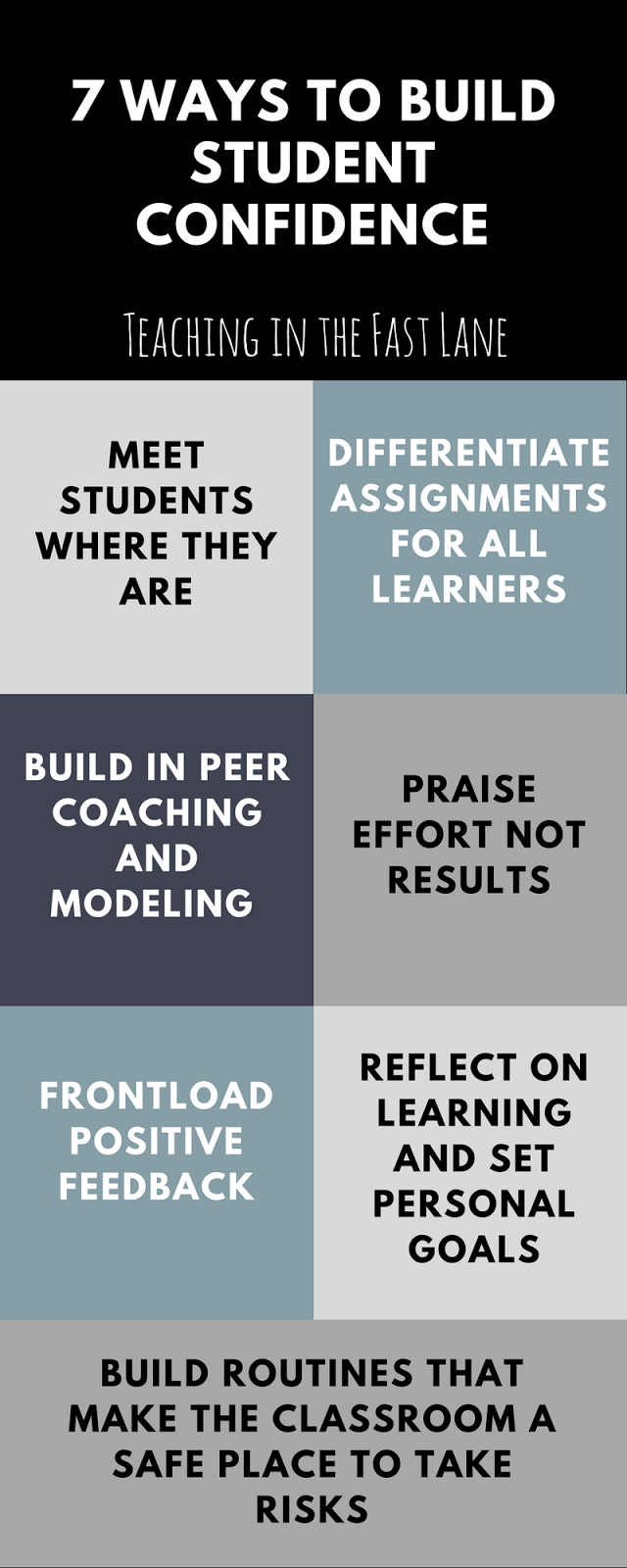
Building confidence in students is an ongoing process that requires a multifaceted approach. It’s about creating a supportive learning environment, fostering a sense of belonging, and empowering students to believe in their own capabilities.
Here’s a roadmap for fostering confidence in your students:
1. Create a Safe and Inclusive Learning Environment:
-
Embrace Mistakes as Learning Opportunities: Encourage a culture where mistakes are seen as stepping stones to growth. Don’t punish errors; use them as teachable moments to help students learn from their experiences.
-
Promote Collaboration and Teamwork: Engage students in collaborative projects and group discussions. This fosters a sense of community and allows students to learn from each other, building confidence in their abilities to contribute to a shared goal.
-
Celebrate Successes, Big and Small: Recognize and celebrate every milestone, no matter how small. Highlight progress and achievements, reinforcing a sense of accomplishment and motivating students to continue striving for excellence.
-
Offer Timely and Constructive Feedback: Provide specific and positive feedback, focusing on areas of strength and offering suggestions for improvement.
2. Foster a Sense of Belonging:
-
Get to Know Your Students: Take the time to build genuine connections with your students. Engage in conversations about their interests, hobbies, and aspirations. This shows them that you care about them as individuals, fostering a sense of trust and belonging.
-
Integrate Diverse Perspectives: Create a diverse and inclusive classroom where everyone feels valued and respected. Embrace different cultures, backgrounds, and learning styles, encouraging students to appreciate and learn from each other’s unique perspectives.
-
Embrace Diversity: Create a welcoming and inclusive classroom environment that celebrates the uniqueness of each student. This could involve incorporating diverse perspectives in lessons, featuring diverse voices in readings, and highlighting the accomplishments of individuals from diverse backgrounds.
-
Connect Learning to Real-World Experiences: Relate classroom lessons to real-world situations and current events. This helps students see the practical relevance of what they’re learning, making it more engaging and meaningful.
3. Empower Students to Believe in Themselves:
-
Set Realistic Expectations: Establish clear expectations and goals that are challenging yet achievable. This allows students to experience success, boosting their confidence and motivation.
-
Encourage Risk-Taking: Create opportunities for students to step outside their comfort zones. Encourage them to participate in activities, try new things, and embrace challenges.
-
Provide Opportunities for Leadership: Assign roles and responsibilities to students that allow them to showcase their skills and leadership potential.
-
Encourage Self-Reflection: Guide students to reflect on their strengths and weaknesses, identifying areas where they can improve. Help them develop a growth mindset, believing that their abilities are not fixed but can be developed through effort and dedication.
4. Building Confidence in a Diverse Learning Environment:
-
Acknowledge and Address Learning Differences: Understand that students learn at different paces and have diverse learning styles. Provide individualized support and accommodations to help each student succeed.
-
Promote Empathy and Understanding: Encourage students to be empathetic towards their classmates and to appreciate the unique strengths and challenges of each individual.
-
Celebrate Cultural Diversity: Embrace and celebrate the rich tapestry of cultures in your classroom.
-
Encourage Inclusive Language: Use inclusive language that respects all students, regardless of their background, gender identity, or abilities.
Real-Life Examples: Turning Words into Action
Example 1: The Shy Writer
Let’s meet Sarah, a student who struggles with writing. She’s incredibly intelligent but lacks confidence in her abilities. Every writing assignment feels like a mountain she needs to climb.
What can you do?
- Start with positive reinforcement: Acknowledge Sarah’s strengths, such as her creativity or her ability to articulate her ideas.
- Break down writing tasks into smaller, manageable steps: This will reduce the feeling of being overwhelmed.
- Provide structured writing prompts: This will give Sarah a clear framework to work within.
- Encourage peer feedback: This helps students learn from each other and feel supported.
- Offer time for revision and editing: Writing is a process, and students need time to refine their work.
Example 2: The Nervous Speaker
Meet Michael, a student who gets stage fright whenever he needs to present his work in front of the class. He’s afraid of judgment and often avoids opportunities to speak up.
What can you do?
- Create a safe and supportive environment: Assure Michael that mistakes are okay and that everyone learns at their own pace.
- Offer opportunities for practice: Encourage Michael to practice his presentation in front of a small group or with a partner.
- Use technology to enhance presentations: Allowing students to use visual aids, such as slides or videos, can ease their nervousness.
- Give positive feedback: Encourage Michael by highlighting his strengths and areas of improvement.
Example 3: The Unsure Student
Let’s imagine Emily, a student who doubts her ability to succeed in math. She feels like she’s not as good as her peers and often gets discouraged.
What can you do?
- Focus on her strengths: Identify Emily’s areas of strength in math and build upon them.
- Provide individualized support: Offer extra help or tutoring to address any specific areas where Emily is struggling.
- Connect math to real-world applications: Show Emily how math is used in everyday life, making it more relevant and engaging.
- Encourage her to set realistic goals: Help Emily break down her goals into smaller steps that she can achieve, building her confidence along the way.
The Power of Role Models: Inspiring the Next Generation
Role models play a crucial role in shaping a student’s sense of self and their belief in their own potential. When students see people who share their backgrounds or interests achieving success, it inspires them to believe that they can achieve great things as well.
Here are some ways to incorporate role models into your classroom:
- Share Inspiring Stories: Introduce students to biographies of successful individuals who overcame challenges and achieved great things.
- Invite Guest Speakers: Invite individuals from diverse backgrounds and professions to speak to your class about their experiences.
- Showcase Success Stories: Share stories of students who have achieved success in your school or community.
- Highlight Role Models in Curriculum: Incorporate examples of successful individuals from different backgrounds and disciplines into your lessons.
The Long-Term Impact: Beyond the Classroom
Building confidence in students is a long-term investment that pays dividends far beyond the classroom. When students feel empowered and believe in themselves, they’re more likely to:
- Pursue Higher Education: Confidence enables students to believe in their ability to succeed in college and beyond.
- Navigate the Job Market: Confidence gives students the courage to apply for jobs, network, and present themselves effectively.
- Build Meaningful Relationships: Confidence empowers students to build strong and healthy relationships with peers, family, and friends.
- Embrace Change and Challenges: Confidence helps students navigate the complexities of life with resilience and determination.
Conclusion: Empowering Students, One Step at a Time
Building confidence in students is not a one-size-fits-all approach. It requires a deep understanding of each student’s unique needs, strengths, and challenges. By creating a safe and supportive learning environment, fostering a sense of belonging, and empowering students to believe in themselves, we can unlock their potential and equip them with the confidence to navigate the world with courage and determination.
Remember, every student has the power to achieve greatness. Our role as educators is to nurture that potential and guide them on their journey of self-discovery and empowerment.
Footnotes
[1] “Self-Efficacy and Academic Performance: A Meta-Analysis” (2007) by Bandura, A. & Locke, E. A. Journal of Applied Psychology, 92(2), 471-481.
Websites to Explore Further:
- Edutopia: https://www.edutopia.org/ – A website dedicated to providing resources and insights for educators.
- The National Education Association: https://www.nea.org/ – A professional organization for educators, offering resources and advocacy for the education profession.
- Positive Psychology: https://www.positivepsychology.com/ – A website dedicated to promoting well-being and positive psychology, offering resources and insights for educators and students.
This article is just the beginning of a lifelong journey of fostering confidence in students. Let’s continue to learn, grow, and empower the next generation to reach their full potential.

